CLZ-150 - Variables, Locals, and Outputs
Goal
Separate learner-controlled inputs, derived naming logic, and observable outputs so a small Terraform configuration remains understandable and reusable.
Prerequisites
- Complete CLZ-140.
- Understand the difference between configuration source and untracked local values.
Architecture
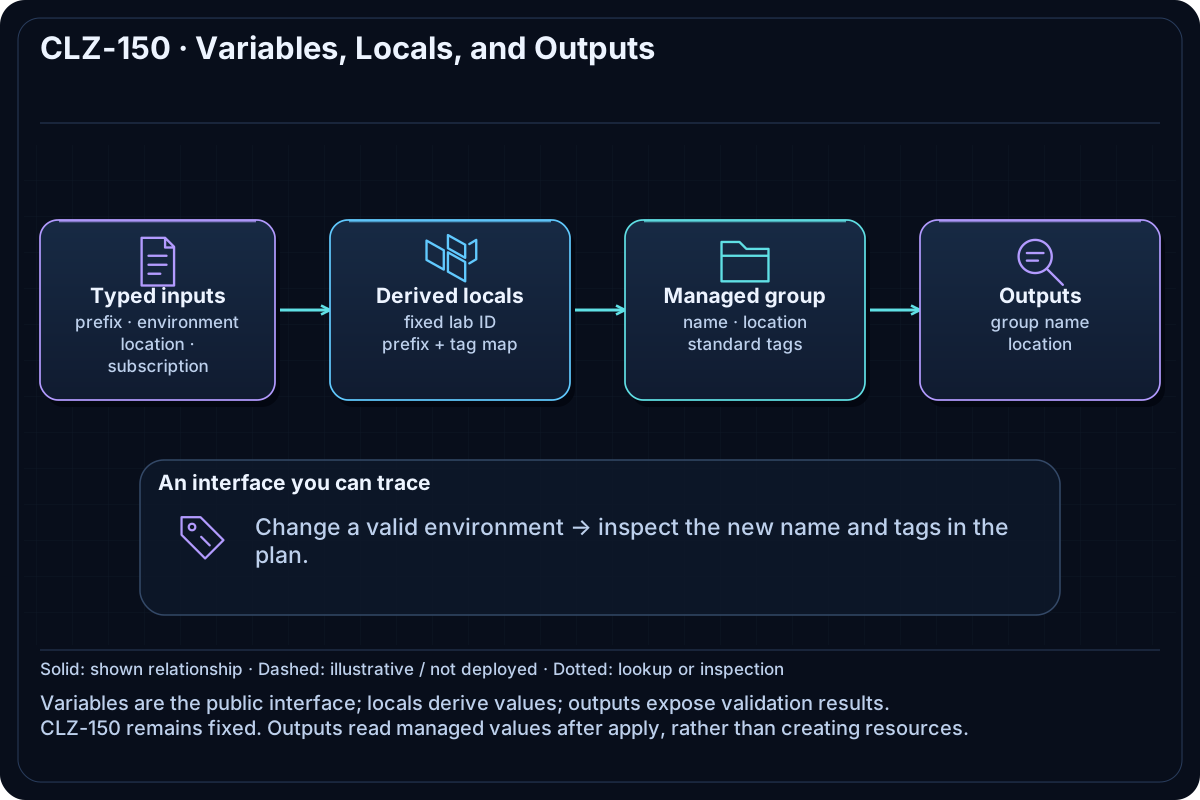
Typed variables define the public interface, locals derive the immutable CLZ-150 naming and tags, one resource group consumes the derived values, and outputs expose only validation-friendly results.
Resources And Cost
Relative cost: Low. The empty resource group has no direct charge.
| Component | Purpose and principal cost driver |
|---|---|
| Variables | The small public interface: subscription, environment, location, and prefix. |
| Locals | Fixed lesson ID plus derived names/tags. |
| Resource group and outputs | A managed example and observable, nonsensitive results. |
Inputs
| Input | Required substitution or decision |
|---|---|
subscription_id |
Required for Azure plan, apply, and destroy; copy the exact ID returned by Azure CLI. |
environment |
Keep dev for the lab or choose test/prod only to study the naming boundary. |
location |
Use a region where your subscription has access and sufficient quota. |
name_prefix |
Use a short lowercase prefix; resource names derive from it. |
Keep real subscription IDs, CIDRs, and secrets in untracked terraform.tfvars or environment variables.
Deploy
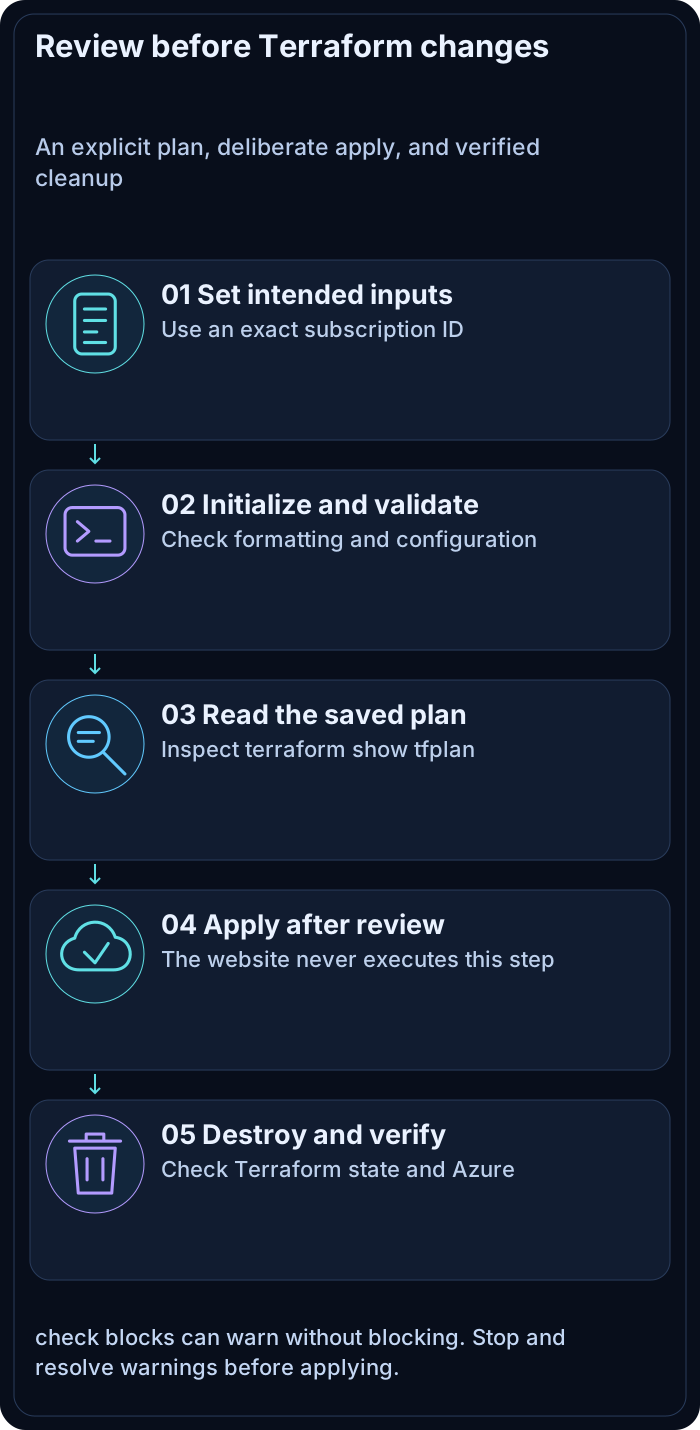
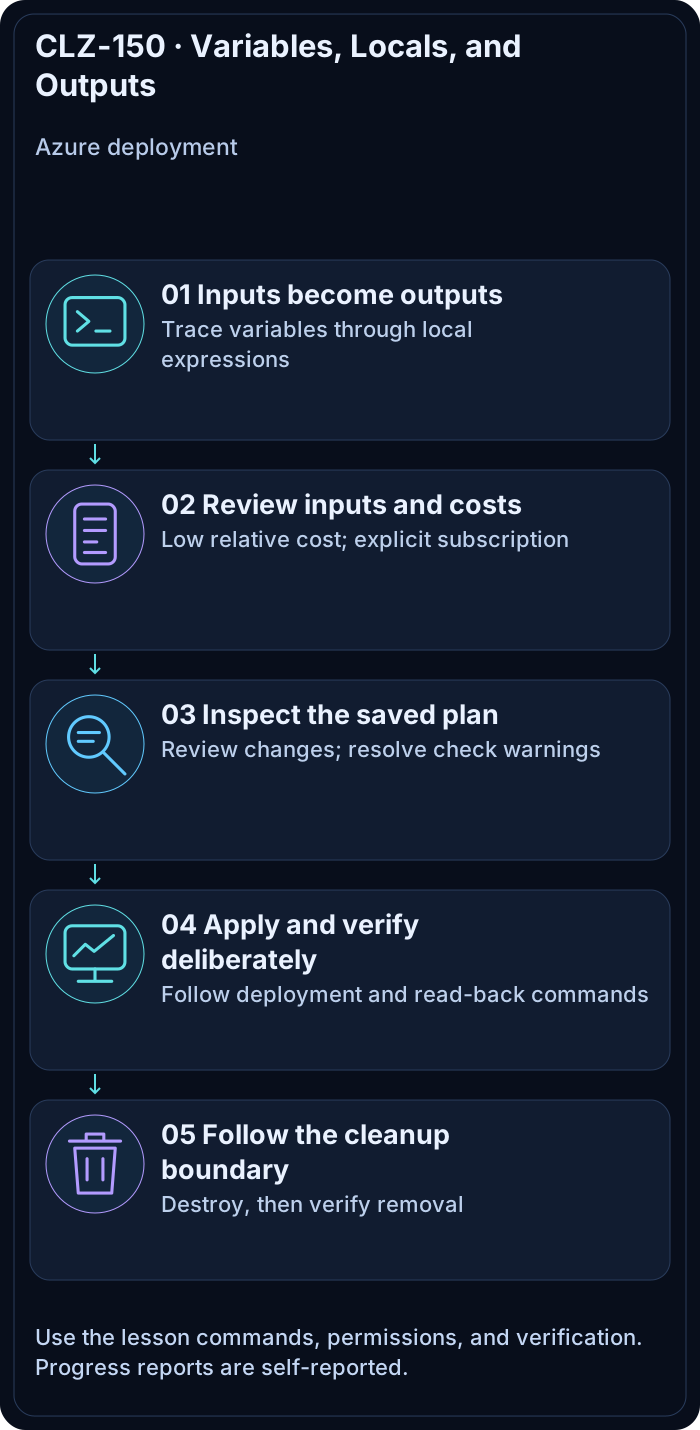
Run from the repository root in PowerShell 7:
Set-Location CLZ-150-variables-locals-outputs
if (-not (Test-Path terraform.tfvars)) {
  Copy-Item terraform.tfvars.example terraform.tfvars
}
$subscriptionId = az account show --query id --output tsv
terraform init -lockfile=readonly
terraform fmt -check
terraform validate
terraform plan -var "subscription_id=$subscriptionId" -out tfplan
terraform show tfplan
terraform apply tfplan
Validate
terraform output -json | ConvertFrom-Json | Format-List
terraform console
local.prefix
local.tags
exit
Expected result:
- Outputs match the selected location and derived resource-group name.
local.prefixincludes the fixedclz150code.- The tag map is derived once rather than repeated across resources.
Troubleshooting
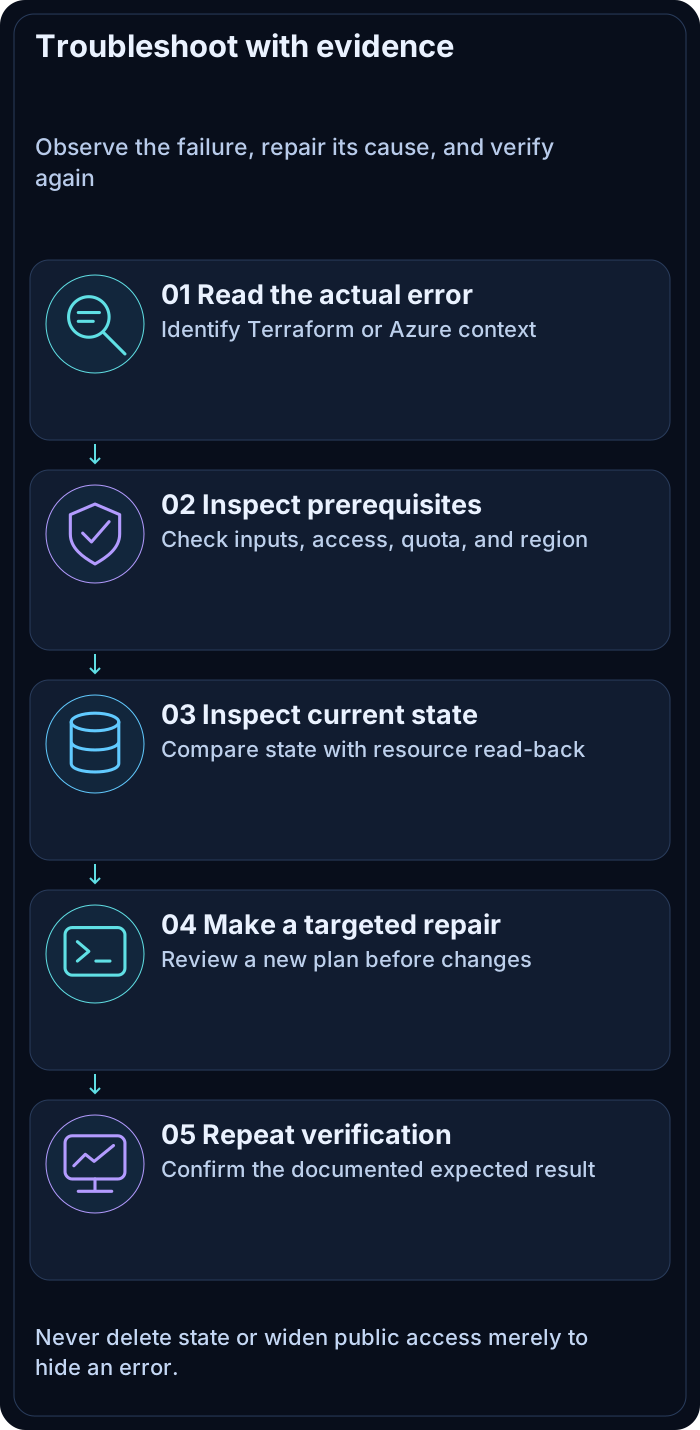
| Symptom | Resolution |
|---|---|
| Terraform rejects an environment | Use one of the values allowed by the variable validation. |
| A local value cannot be overridden | Change its source input; locals intentionally are not public inputs. |
| An output is marked unknown during plan | The value depends on an Azure result that is known only after apply. |
Cleanup
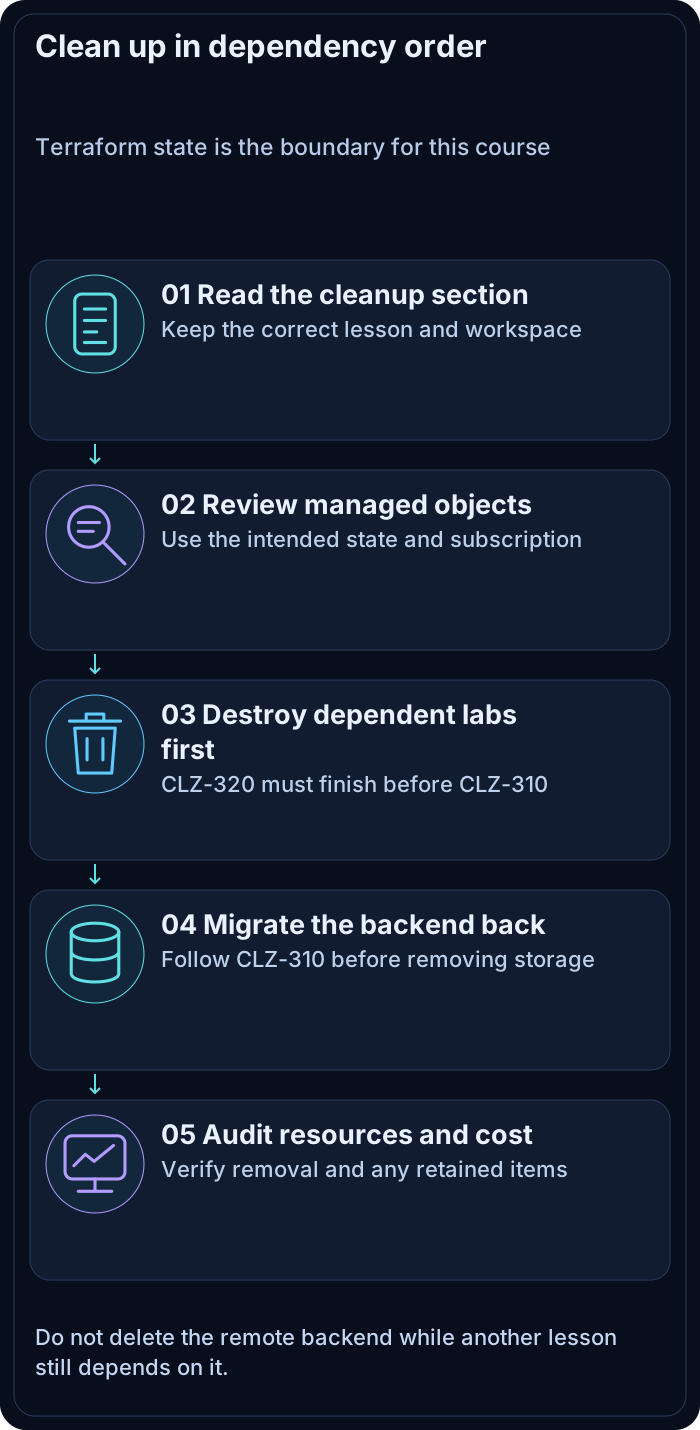
$resourceGroup = terraform output -raw resource_group_name
terraform destroy -var "subscription_id=$subscriptionId"
az group exists --name $resourceGroup
Azure CLI returns false, and terraform state list is empty.
Production Delta
- Treat module inputs and outputs as versioned interfaces; document breaking changes.
- Mark secret outputs sensitive, but remember that sensitive values can still exist in state.
Exercises
- Add a validation for a deliberately constrained prefix and test one invalid value.
- Create a new nonsensitive output from existing locals without duplicating naming logic.
Navigation
← CLZ-140 - Resource Groups and Tags | Curriculum | CLZ-160 - State and Locking Basics →